
Just weeks after publicly supporting a recommendation by the Australian Law Reform Commission (ALRC) for the definitions to be simplified, Neil Macdonald has again called for its separation in a new opinion piece published on ifa.
“Separating product from advice will not mean an adviser can’t, or shouldn’t, recommend a product solution. Of course, they will, and in many cases, certainly, they should,” Mr Macdonald wrote.
“How would it be if we went to the doctor, explained we had a headache, the doctor diagnosed us as having a migraine but then did not prescribe a solution, often a pharmaceutical product, to help manage it?
“What separating product from advice should mean that product providers can’t go about pretending to provide advice when what they are actually doing is providing information on their own product. In other words, they should not be allowed to tell people that the information they provide about their migraine product is medical advice.”
Mr Macdonald has called for changes to the definitions in the Corporations Act, as well as divorcing the word ‘advice’ from ‘general advice’ and changing who and what structures are required to offer personal advice.
“Transforming the financial advice industry to a genuine profession requires the uncoupling of advice and product and a collective will – the willingness for all stakeholders to work together collaboratively,” Mr Macdonald wrote.
Read the full opinion piece here.
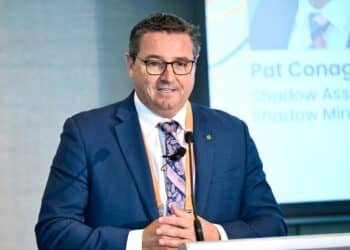


“How would it be if we went to the doctor, explained we had a headache, the doctor diagnosed us as having a migraine but then did not prescribe a solution, often a pharmaceutical product, to help manage it?”
Then where’s the Royal Commission investigating the relationship between doctors and Big Pharma? Or is it only our industry getting singled out?
They have one very strong lobby group. We have 4 or 5 weak ones,
Continual improvement is admirable, desirable. But the definition of a ‘genuine profession’ is highly subjective with the goalposts continually changing. Be careful what you wish for – you may end up refining and perfecting your industry down to dust.
I wont shed any tears if the AFSL parasitical system is disbanded.
I still cannot understand how some boutiques can plough all of their clients into their own MDA and say they are separating advice v product – because they simply are not !! – needs asic investigation.
A lot of these MDA’s don’t perform very well and clients are not provided alternative investment choices.
Nor can I and it is clearly, “the elephant in the room” and I cannot for the life of me work out why ASIC ignore it.
If that was to pass there goes the mid tiers and small AFSL’s margin capture on white lablled platforms and Managed accounts and therefore their viability.
Correct, but given they don’t add value, why is it important that they remain viable?
Yes – but then most of the Dealer Groups would be out of business and they are a very powerful lobby group.
All at the expense of actual client facing Advisers – of course.
Interesting Gary….please explain their collective lobbying achievements over the past 8 years?
Not being confrontational, just interested to know what I may have missed!
They have retained vertical integration and AFSL based adviser licensing. These are two of the biggest unresolved problems in financial advice, yet no-one in power has been willing to touch them.
Even Hayne said that while he could see the problems vertical integration was causing, he was concerned about the “costs and disruptions” of dismantling it. So he imposed even more costs and disruption directly onto advisers instead.
Agree – which begs the question, “why is the issue, off limits”? ‘Why won’t the Regulators tackle the issue”?
Sadly, the regulators won’t tackle the issue because they don’t know how. Therefore, easier just to leave it alone.
Sorry KC – I was being ironical. They lobbied for their own interests….at our expense and I hold them (collectively), as well as the Institutions, largely responsible for the current state of affairs.
Well said Neil, but what about endorsing what the AIOFP have been proclaiming for some years already?
Well before the Hayne Royal Commission the AIOFP was stating what was obvious for all who actually wanted to see it.
– You either manufacture or distribute
– As an adviser you get paid by your client for what you advise and no back door volume rebates or the like that the client is unaware of.
Fully disclosed insurance commissions paid to the adviser out of the premium paid by the client is not a conflict, it is simply a way for a client to cash flow fund payment for advice.
Undisclosed payments from a product manufacturer to an adviser are something else entirely.
“Fully disclosed insurance commissions paid to the adviser out of the premium paid by the client is not a conflict”
Um, it is if you don’t tell them that their premiums would be significantly cheaper if they just paid for the service, it is a big conflict of interest.