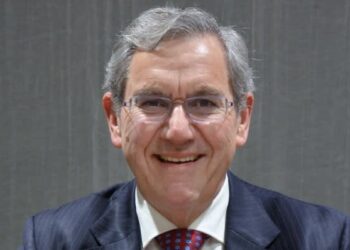
In its submission to the Department of Home Affairs Consultation Paper, 2026 Reforms to the AML/CTF Act, the Financial Advice Association Australia (FAAA) backed proposed new powers for the chief executive of AUSTRAC.
Under the powers described in the paper, the body’s CEO would be able to “restrict or prohibit certain high-risk products, services or delivery channels under the AML/CTF regime”.
In October last year, AUSTRAC CEO Brendan Thomas said there is an “unacceptable risk of money laundering” across certain channels.
“Having a power like this enables the CEO to adapt to the evolving risk environment in more responsive ways,” Thomas said at the time.
“For example, crypto transactions are becoming integrated into money laundering methodologies and crypto ATMs present even more risks due to the ability to turn cash into digital currency that can be sent instantly and virtually anonymously across the globe.”
However, while the FAAA was supportive of the move “in principle”, it noted concerns around the fairness of the powers if the “scope, criteria and application of this proposal is too broad or too uncertain”.
“It would be helpful to see examples of how the proposed CEO power might work in practice, given it is a broad power that can be applied across an entire sector, not just one entity,” the submission said.
The consultation paper probes whether the powers should apply to the provision of all designated services or limited to registrable services, with the FAAA saying there is “merit” to the powers being limited.
“Consideration should be given as to whether this limitation would adequately deal with emerging risks, products, services and delivery channels,” it said.
“However, if the powers are applied to all designated services, appropriate and clear criteria should be developed to ensure that the proposed powers can only be applied to genuinely high-risk products, services and deliver channels.
“Within a designated service cohort, there will likely be a variety of products and services provided using a range of delivery channels. Each of these may present a different level of ML/TF risk – i.e. low, medium or high risk.”
According to the FAAA, this variation in risk should be part of the criteria to ensure the CEO powers apply only to the “products, services and delivery channels that present a particularly high ML/TF risk”.
“Low-risk products, services and delivery channel should be explicitly excluded, including in circumstances where the powers are applied to high-risk services under the same designated service definition,” it said.
“If appropriate criteria is developed to permit the powers to be used in relation to an identified cohort of high-risk providers in each designated service, this approach may provide a reasonable application of the powers that is broader than registrable services to cater for emerging risks.”
However, if the scope of the power was broader and applied to all designated services, it could unfairly penalise reporting entities that provide low-risk services only.
“Noting that the aim of this measure is to provide powers for the CEO in relation to ‘high-risk products, services and delivery channels’, we suggest the criteria used in the application of the power should carefully identify the higher-risk services and providers amongst the reporting entities enrolled to provide the relevant designated services under each definition,” it said.
“The aim would be to ensure any restriction or prohibition would apply to the specific high-risk products, services, and delivery channels, and avoid inadvertent inclusion of lower-risk products, services and delivery channels.”
Part of the FAAA’s concern over the impact on providers of lower risk services is that, for the most part, financial advisers fall into this category.
“Generally, financial advisers do not recommend products, services or use delivery channels that pose a high ML/TF risk; and the majority of financial advisers’ clients are individuals based in Australia,” it said.